Salary Negotiator


Negotiating a salary can be a daunting task for many individuals. It often involves stepping out of one's comfort zone and advocating for oneself. However, it is a crucial aspect of any job offer, and taking the time to negotiate can have significant benefits for your career and financial future.
One of the key benefits of negotiating a salary is the potential to increase your earning potential. By advocating for a higher salary, you are not only setting a foundation for increased income in your current position, but also potentially setting a higher starting point for future salary discussions. Over time, even a modest increase in salary can compound and have a significant impact on your overall earnings.
Another advantage of negotiating a salary is the opportunity to demonstrate your value as an employee. By confidently expressing your worth and the value you bring to the company, you are positioning yourself as a valuable asset. This can help set the stage for future promotions, raises, and career development opportunities.
One approach that can be helpful during salary negotiations is the Ackerman negotiation model. Developed by Christopher J. Ackerman, this model provides a framework for structuring negotiations to achieve optimal outcomes. The model consists of five key steps:
1. Set your target salary: Determine the pay range that you believe is fair and reasonable based on your skills, experience, and market value. This is the amount you will strive to achieve during the negotiation process.
2. Set your ideal outcome: This step involves setting an ambitious but achievable goal that is slightly higher than your target salary. By starting with a higher ideal outcome, you give yourself some room to negotiate and potentially secure a higher salary.
3. Set your first offer: Now, you need to determine an opening offer that is significantly lower than your target salary, but not too low as to be disrespectful or unrealistic. This helps to create a starting point for the negotiation and sets the tone for further discussions.
4. Make calculated concessions: Throughout the negotiation process, be prepared to make concessions by lowering your salary expectations in response to the employer's counter offers. However, each concession should be smaller than the previous one. This method helps to establish a pattern of compromise and increases the likelihood of reaching a mutually beneficial agreement.
5. Know your walk-away point: Finally, it's crucial to determine the point beyond which you are not willing to accept the offer. This helps you set boundaries and ensures that you do not settle for a salary that is below your market value or personal needs.
Now, let's talk about the exciting new feature offered by PoachMe called "Salary Negotiator." This feature aims to simplify and streamline the salary negotiation process for developers. It allows developers to input their target salary and, using the Ackerman negotiation model, provides a range of response salaries and suggested responses to use during the negotiation process.
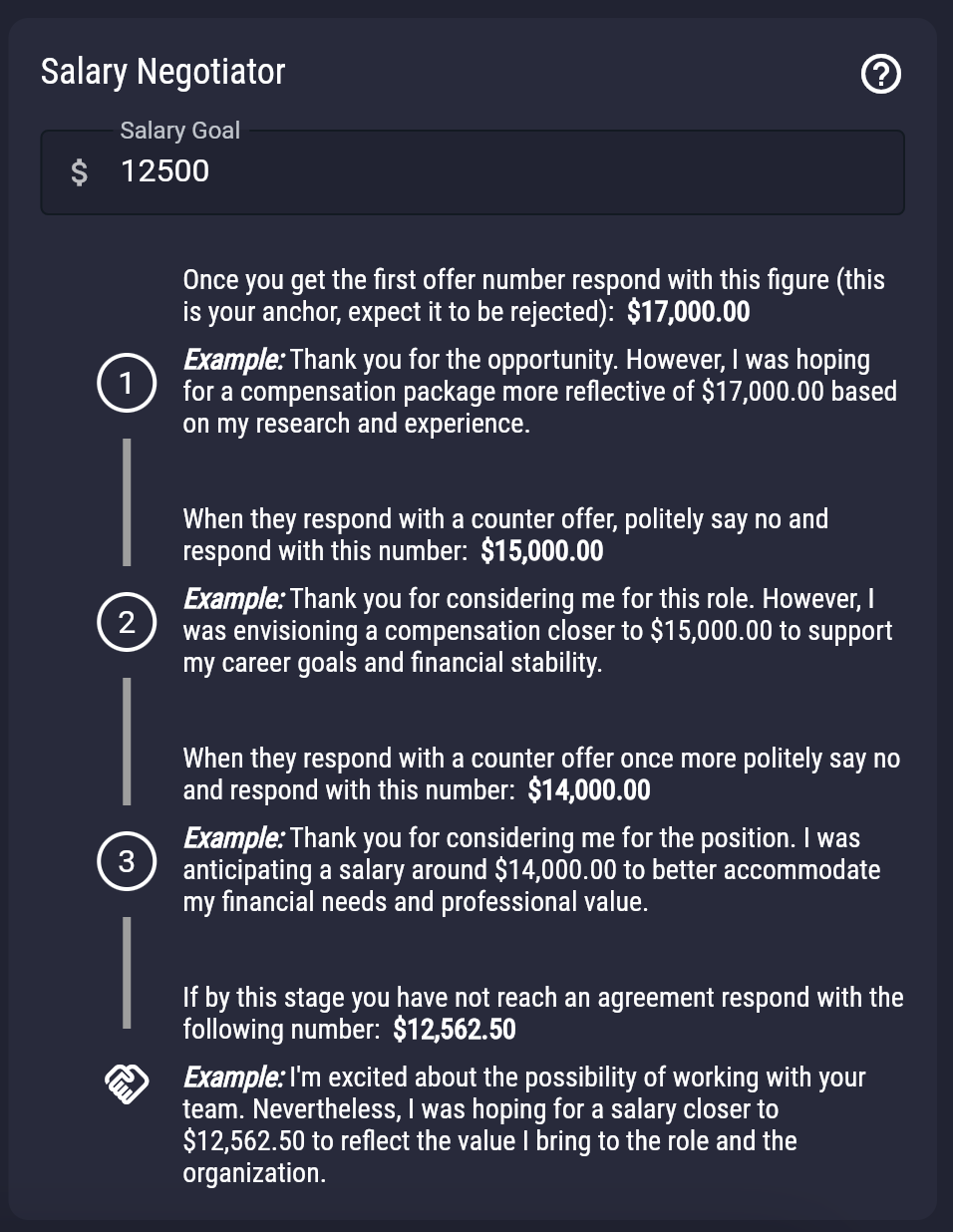
By leveraging this feature, developers can have a clear understanding of their desired salary range and how to effectively negotiate for it. This can help alleviate the stress and uncertainty often associated with salary negotiations, enabling individuals to approach the process with confidence and assertiveness.
In conclusion, negotiating a salary is a vital skill for professionals to develop. It not only has the potential to increase your earning potential but also allows you to demonstrate your value and set the stage for future career development. With the introduction of the "Salary Negotiator" feature offered by PoachMe, developers now have an actionable tool to guide them through the negotiation process and help them secure the salary they deserve. So, go ahead and make the most of this feature to advocate for yourself and maximize your career opportunities.